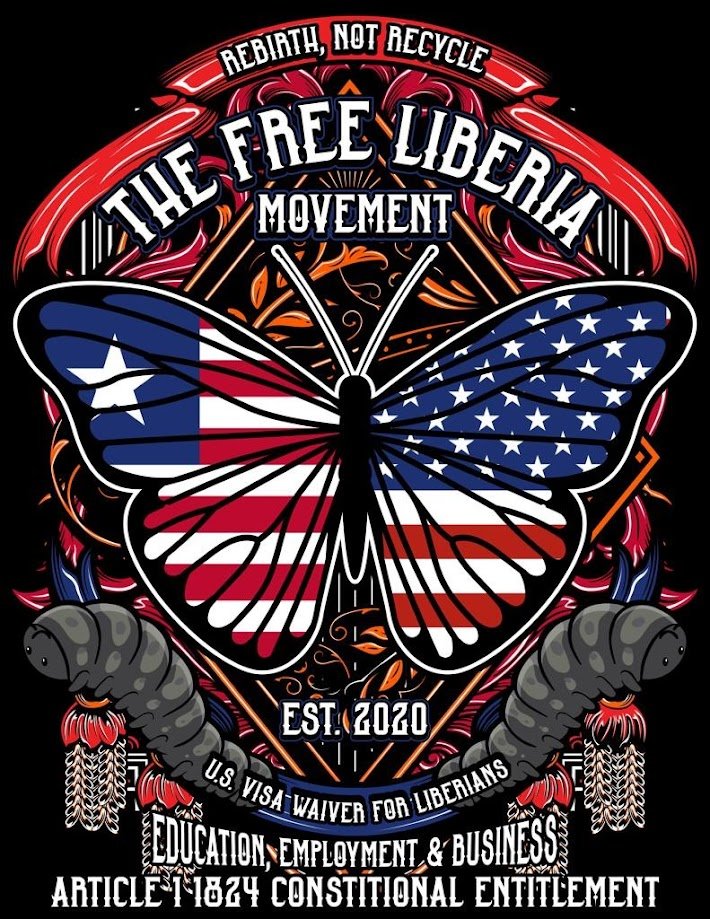


Mass-250: Remembering Freedom — Completing Freedom-John 8:32
As Massachusetts prepares to celebrate its 250th anniversary in 2026, we are called not only to celebrate independence, but to remember the truth that gave birth to this nation.
On July 4, 1776, our founders declared: “We hold these truths to be self-evident, that all men are created equal.” In 1780, the Massachusetts Constitution proclaimed, “All men are born free and equal.” These words reflect a sacred conviction—that every person is created in the image of God.
Yet in 1790, the first Naturalization Act limited citizenship to “free white persons,” contradicting the principle of equal dignity. Though centuries have passed, the legacy of racial exclusion has left lasting wounds, including the exile and settlement of Black Americans in Liberia. Today, many Liberian families continue to struggle for stability, recognition, and fair treatment—often unnoticed by the broader public.
Jesus reminds us: “I was a stranger and you welcomed me.” (Matthew 25:35) As people of faith, we are called to see those who are overlooked and respond with compassion.
The Free Liberia Movement’s Fourth and Final Remonstrance invites our nation to pursue truth, healing, and restoration. In this election year and during America-250 commemorations, meaningful change begins with ordinary people of conscience.
We invite our church community to consider four steps:
- One Church–One Guest: Sponsor a Liberian guest for the 250th observances.
• Support dialogue on legislation promoting healing and equal citizenship.
• Recognize August 22, 2026 as a day of remembrance and reconciliation.
• Stand in solidarity by honoring Elizabeth “Mumbet” Freeman’s legacy of freedom.
Justice pursued in love can help complete the freedom we celebrate.
BIND YOUR MASS250 WORSHIP & VOTE TO TRUTH & Human Dignity
A Call to Healing, Truth, and Justice — Mass-250 & Liberia
As Massachusetts prepares to celebrate its 250th anniversary in 2026, we are invited not only to commemorate independence, but to remember the truths that gave birth to this nation. On July 4, 1776, our founders declared, “We hold these truths to be self-evident, that all men are created equal, that they are endowed by their Creator with certain unalienable Rights, that among these are Life, Liberty and the pursuit of Happiness.”
On June 15, 1780, the Massachusetts Constitution went even further, proclaiming, “All men are born free and equal.” These were not merely political statements; they were moral affirmations grounded in the belief that every human being bears the image of God.
Yet in 1790, Congress made a choice that contradicted those sacred principles. The first Naturalization Act limited citizenship to “free white persons,” elevating one race above others in law and diminishing the equal dignity of God’s creation. That decision left wounds that extended far beyond its time, shaping generations and contributing to the exile and settlement of Black Americans in Liberia.
These events occurred centuries ago. But history lives on in the experiences of real families today. Many Liberians—connected by deep historical ties to the United States—continue to face barriers, uncertainty, and unequal treatment. Much of this suffering goes unnoticed. The media rarely highlights the struggles of communities with little political influence, and so many Americans remain unaware.
In 2026, as we celebrate liberty, we must also ask whether our treatment of the vulnerable reflects the truths we profess. Scripture reminds us of Jesus’ words: “I was hungry and you gave me food, I was thirsty and you gave me drink, I was a stranger and you welcomed me.” Our faith calls us to see, to care, and to act—not in anger, but in love.
In response to this unfinished legacy, the Free Liberia Movement has issued the Fourth and Final Remonstrance—a constitutional appeal for truth, repair, and restoration. This is not a call to divide America, but to help it live more fully into its founding promise. It is an invitation to align our laws and policies with the conviction that all people are created equal.
In an election year especially, meaningful change will not come from politicians alone. It will come from people of conscience—neighbors, congregations, and communities willing to stand in solidarity with those who feel unseen. Massachusetts has led before in expanding freedom. It can lead again—not by denying the past, but by courageously embracing truth.
We invite churches and communities of faith to consider four constructive steps toward healing:
First, Support One Church–One Guest sponsorship, fostering friendship and shared celebration of 250 with exiled Americans from all walks of life to participate in the Commonwealth’s 250th-anniversary observances.
Second, support the proposed bill, United States Healing, Unity, and Reparative Justice Act, restoring U.S. citizenship to Americans exiled because of the 1st Nationality Act, a bill modeled after the 1924 Indian Citizenship Act, which sought to correct racial exclusion through law.
Third, consider designating August 22, 2026, as Freedom Day—a day of remembrance, reconciliation, and shared hope-honoring Elizabeth “Mumbet” Freeman, whose courageous pursuit of freedom helped give life to the words “all men are born free and equal.”
Fourth, follow Springfield, Massachusetts’ example adopting Solidarity Resolution
This anniversary is more than a celebration; it is an opportunity. Faith calls us not only to honor history, but to embody it. Justice pursued in humility and love can restore dignity, strengthen unity, and help our nation more faithfully reflect the truth it declared in 1776—that all are created equal in the sight of God.
Rev. Torli H. Krua -Tel:857-249-9983
Ziah Mission Church
30 Gordon Street
Allston, MA 02134
As America Turns 250: Pastor Torli Of Ziah Mission Church Calls for Truth, Healing, and Reckoning
Rev. Torli H. Krua
As the DIVIDED “United” States prepares to commemorate 250 years since the American Revolution, Massachusetts will rightly celebrate a proud democratic legacy. This Commonwealth gave the world the first modern democratic constitution, declaring that “all men are born free and equal.”
Massachusetts also remembers that the first life lost in the Revolution was Crispus Attucks, a Black man. From the beginning, Black patriots shed blood for liberty in a Commonwealth that proclaimed equality as law.
Yet anniversaries without honesty ring hollow. As 2026 arrives, Ziah Mission Church calls on the Faith Community to join us in calling on all elected officials across Massachusetts to confront an uncomfortable truth: the Commonwealth has never fully reconciled its role in violating the very constitutional principle it continues to profess. As citizens and voters we call on each elected official to publicly respond to this call to restore human dignity, justice and equality destroyed by slaveholders on March 26, 1790 with codified racism of H.R.40 1st Nationality Act-1790.
Every Governor and elected official of Massachusetts takes an oath to support and defend the Constitution. That oath is not ceremonial. It is a binding obligation—even when the Commonwealth itself betrayed African Americans and helped engineer systems that displaced equality rather than extended it.
The contradiction began early. In 1641, Massachusetts legalized slavery under a deceptively moral name: the “Body of Liberties.” Enslavement endured for generations because injustice was cloaked in the language of freedom. This pattern—liberty in name, denial in practice—would later define the colonization of African Americans-to a “Land of Liberty.”.
In 1781, an illiterate, enslaved Black woman named Elizabeth Freeman, known as Mum Bett, exposed that contradiction. In her landmark lawsuit, Brom and Bett v. Ashley, she argued that the Constitution’s words—“all men are born free and equal”—were binding law. The court agreed. By 1783, Massachusetts outlawed slavery-decades before the Civil War. Mum Bett won her freedom and monetary damages, establishing a lasting principle: liberty without repair is incomplete justice.
That victory provoked backlash. Rather than extend Mum Bett’s logic nationwide, Congress responded with the Naturalization Act of 1790, racializing citizenship by law—limiting it to “free white persons,” notwithstanding the Massachusetts Constitution of 1780. Equality was deemed destabilizing. Removal and deportation of African American citizens became the nationwide solution.
What followed was ethnic cleansing by policy: the removal and colonization of U.S. citizens of African descent. American Colonization Societies soon formed across the nation, including in Massachusetts, with the explicit goal of exporting Black birthright citizens—many descended from Massachusetts patriots—to West Africa. Citizenship was reframed as a problem. Exile was branded as benevolence.
The colonization of U.S. citizens in Liberia was deceptively branded the “Land of Liberty.” In reality, U.S. presidents, cabinet officials, and congressional records consistently described Liberia as an American colony in Africa—acquired with public funds, enforced by the U.S. Navy, governed under U.S. authority, and populated by citizens whose equality in the United States was considered too dangerous to tolerate, despite equality and justice being foundational principles of the nation. Notably, ten presidents of Liberia were U.S. citizens, born and educated in the United States.
This open secret of racialized model of citizenship did not stop at America’s borders. Its logic shaped Jim Crow laws in the United States, influenced Nazi Germany’s 1935 race laws, and underpinned apartheid in South Africa beginning in 1948. Germany and South Africa later confessed, dismantled race-based legal systems, pursued reconciliation, and paid reparations. The United States has never issued a comparable national confession. A congressional bill to study reparations—H.R. 40—was first introduced more than 36 years ago and remains stalled.
The exiled African American settlers understood the fraud immediately. On December 5, 1823, they issued the Second Remonstrance, protesting their removal and the stripping of their rights. In 1830, Joseph Shephard of Monrovia, Liberia issued the Third Remonstrance, condemning broken promises and racial subjugation. Each time, the truth was placed on the record. Each time, it was ignored.
That silence continued into modern times. In 1990, as Liberia descended into civil war, the United States issued a classified State Department cable imposing a near-total ban on Liberian refugees—even as civilians fled violence planned and financed from the United States, including from Boston.
The pattern persists today. In 2023, under Biden, Liberians face a U.S. visa refusal rate of nearly 80 percent, compared with far lower rates for countries such as Iran-53%, Afghanistan-48%, and Russia-38%. Liberians have paid an estimated $1.7 million in nonrefundable visa fees in 2026—extracted largely from one of the poorest populations on earth—for denials rooted in racialized citizenship.
The disparity is especially stark in light of history. Liberia declared war on Nazi Germany and hosted American troops during World War II, safeguarding U.S. strategic interests in Africa. Yet in 2026, more than one billion people from 43 countries—including Germany—may enter the United States without a visa, while Liberians—including descendants of Massachusetts patriots—are routinely denied entry. The difference is not allegiance. It is the persistence of officially sanctioned racial discrimination rooted in the Naturalization Act of 1790.
In response, the Free Liberia Movement has issued the Fourth and Final Remonstrance, uniting these historical and legal claims into a single constitutional demand for truth, repair, and restoration.
Yet as Massachusetts marks its 250th anniversary in the 2026 election year, meaningful change will not come from commemorations alone. It will require ordinary people—especially people of faith—to stand in solidarity with Liberians and to insist that political and religious leaders stop pretending they are unaware of the ongoing harm caused by America’s original apartheid system of citizenship, created by Congress in 1790.
Massachusetts can lead the nation once again by advancing three concrete actions outlined in the bulletin insert below:
First, invite 250 Liberians to participate in the Commonwealth’s 250th-anniversary observances without visa barriers through a One Church–One Guest sponsorship initiative.
Second, sponsor a federal birthright-citizenship bill modeled on the 1924 Indian Citizenship Act, which corrected a historic racial exclusion through legislation. This proposal was already presented to the U.S. Senate in 2025. The United States Healing, Unity, and Reparative Justice Act of 2026 can become law if worshippers, acting as voters, share it nationwide and bind their votes to healing and unity. When voters lead, politicians follow.
Third, designate August 22, 2026 as Liberia’s Liberation with Reparations Day, marked by the hoisting of the Liberian flag in cities across America. This national observance would join Springfield in honoring Elizabeth “Mumbet” Freeman—the formerly enslaved, illiterate Black woman who sued her enslaver, won her freedom and reparations, helped end slavery in Massachusetts, and whose victory triggered the backlash that produced the 1790 apartheid naturalization law and the permanent colonization of U.S. citizens in West Africa.
This legislation—the United States Healing, Unity, and Reparative Justice Act—has already been presented to the U.S. Senate. It represents repair through law, not charity, and offers a path toward truth, reconciliation, and national healing.
Progress deserves recognition. Senator Jack Reed introduced the Liberian Refugee Immigration Fairness Act, which President Donald Trump signed into law in 2019. We also honor Ben Swan (Retired), Representative Bud Williams, Hon. Malo Brown, and Springfield City Councilors who stood with Liberians long trapped in legal limbo.
Yet fairness on paper has not meant safety in reality. As the 2026 snowstorm ravages the eastern seaboard of America, many Liberian refugees admitted during the Obama administration remain without permanent legal status, scattered across the country, enduring dangerous winters and economic precarity decades later.
As America prepares for Black History at the 250th anniversary, Hon. Tracye Whitfield, President of the Springfield Massachusetts City Council joins Ziah Mission Church in calling on all elected officials of the Commonwealth and across the United States to make a choice: celebrate a Constitution while ignoring its betrayal, or lead the nation once more—this time in truth, healing, and repair.
Rev. Torli H. Krua-Tel: 857-249-9983
Ziah Mission Church
30 Gordon Street
Allston, MA 02134

Leave A Comment